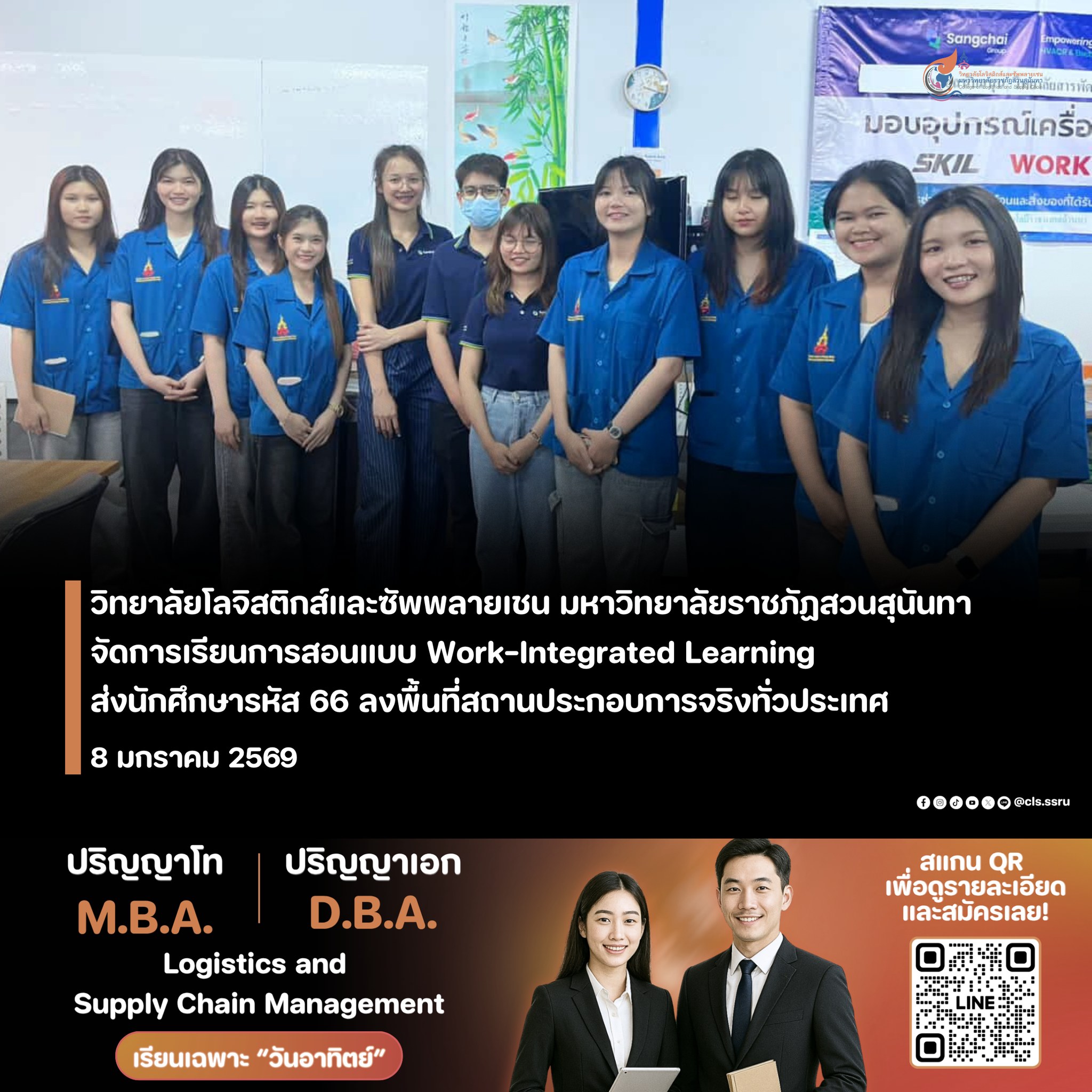
Logistics Students (Code 66) Conduct Fieldwork!
Gathering Data from Businesses to Develop Special Projects
Turning Classrooms into Professional Laboratories
On Thursday, January 8, 2026,
The College of Logistics and Supply Chain, Suan Sunandha Rajabhat University,
continued its concrete advancement of Work-Integrated Learning (WIL) by conducting fieldwork at real businesses nationwide. This was to gather in-depth data for their “Special Project” course.
The activity aimed to enable students to apply theoretical knowledge from the classroom to real-world situations through on-site analysis. The goal was to find ways to develop and solve systemic problems, leading to the creation of innovative and sustainable professional proposals that meet the needs of the industry.
From Theory to Practice
This fieldwork was not just a sightseeing trip, but a true Research & Analysis endeavor. Students were assigned to study and analyze work processes in the logistics and supply chain industry, such as:
Warehouse Management
Transportation and Distribution (Transportation & Distribution)
Inventory Management
Procurement
Developing Professional Thinking, Analysis, and Problem-Solving Skills
The main goal of the special project course is to train students to identify "pain points" or real-world problems in organizational work processes. They then analyze this information using logistics tools, supply chain management, and the application of Digital Transformation concepts to propose concrete and practical solutions.
This
activity reflects the strengths of the
College of Logistics and Supply Chain,
Suan Sunandha Rajabhat University, in
producing graduates who "learn from
real-world experiences, can work
effectively, and are ready to become
professional logistics
practitioners," truly meeting the
needs of the current and future job
market.